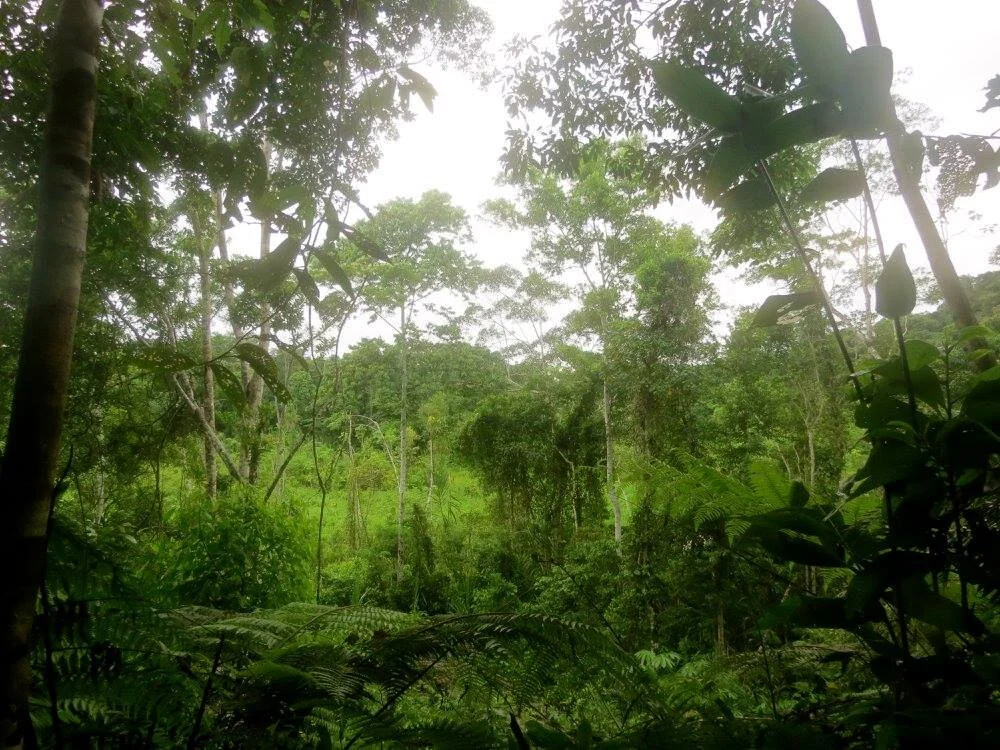
Primatology Field School
In this course we will explore different topics in primate research, learn data collection and analysis techniques and write a research proposal. We will apply what we learn during the first half of the semester during a three-week trip into the field. Our semester will culminate in a mini research symposium where we share our work with our student and professor colleagues. This course is designed for people of varying skill and experience levels, so don’t worry if you’ve never been to the field.
If you are interested in this course, contact me so we can talk about possible funding opportunities to help you pay for the field school!
Check out some images from previous field schools below.
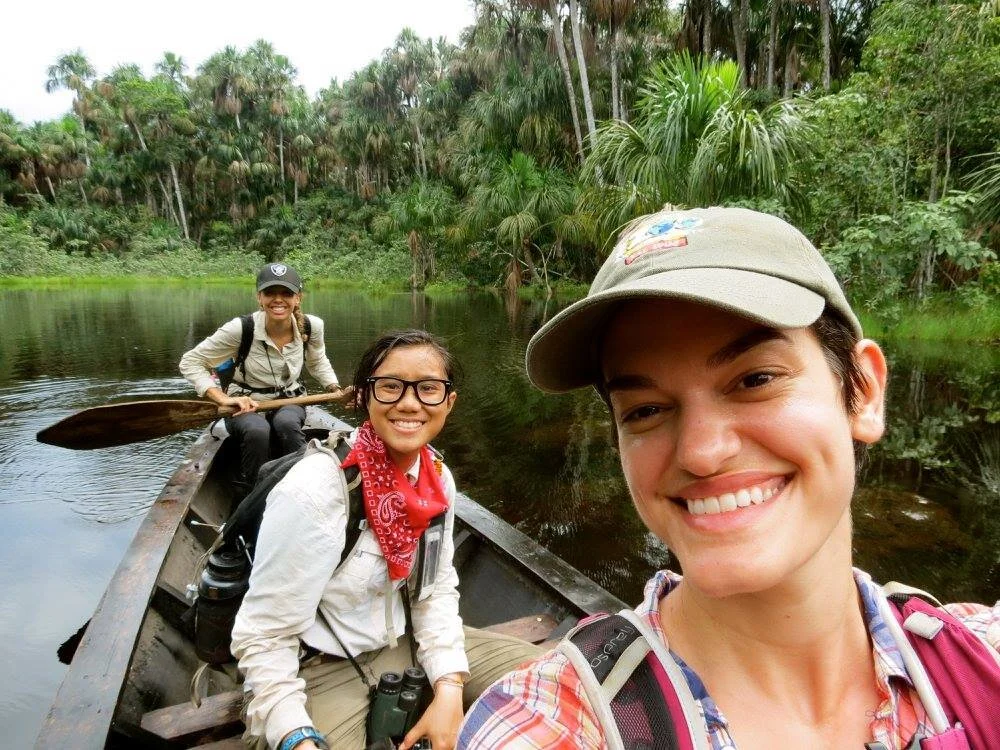
Imani Russell (rear), Krista Banda (middle) and I taking a break from data collection to canoe around a lake looking for giant otters in Peru (unfortunately we didn’t see any otters but we saw birds, monkeys, butterflies, fish and so many more awesome things!).
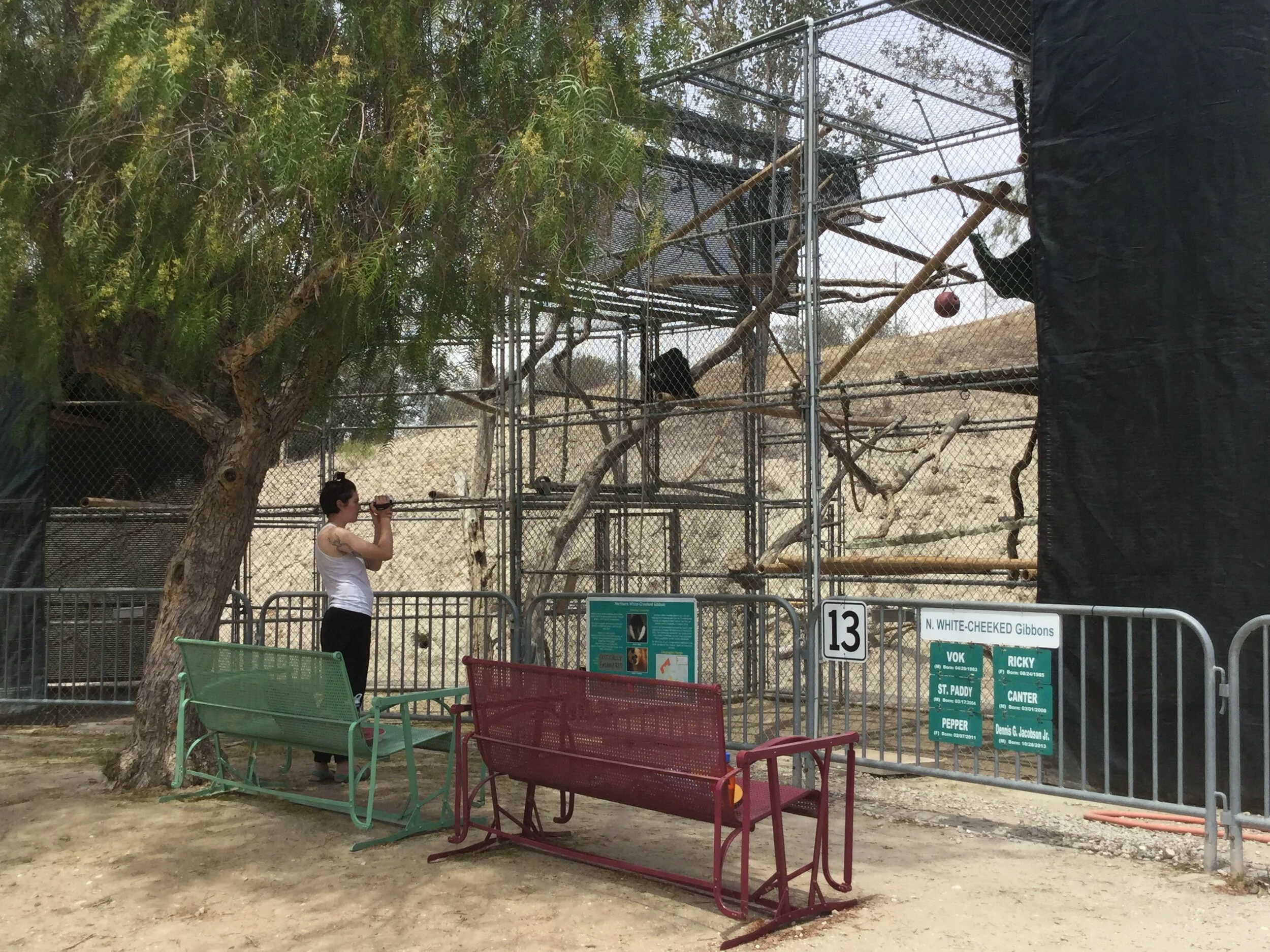
Kaylen Kilfeather filming a group of white-cheeked gibbons (Nomascus leucogenys) at the Gibbon Conservation Center in California. She was studying gestural communication between group members and using the video footage to document what gestures the gibbons were using.
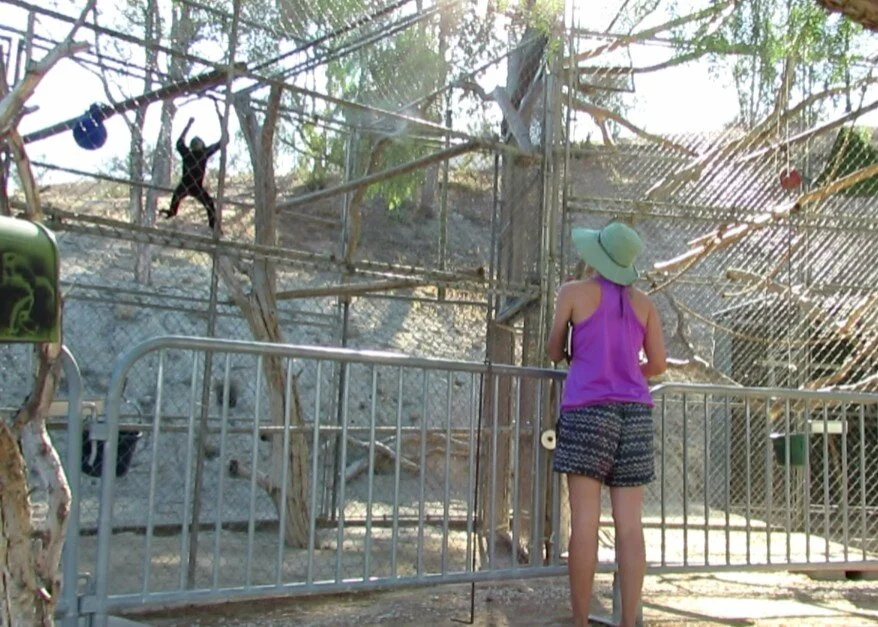
Me studying behaviors of different gibbon species at the Gibbon Conservation Center in California. Here I am collecting behavioral data on one white-cheeked gibbon named Canter, a sub-adult male living with his mom, dad, younger sister and younger brother.
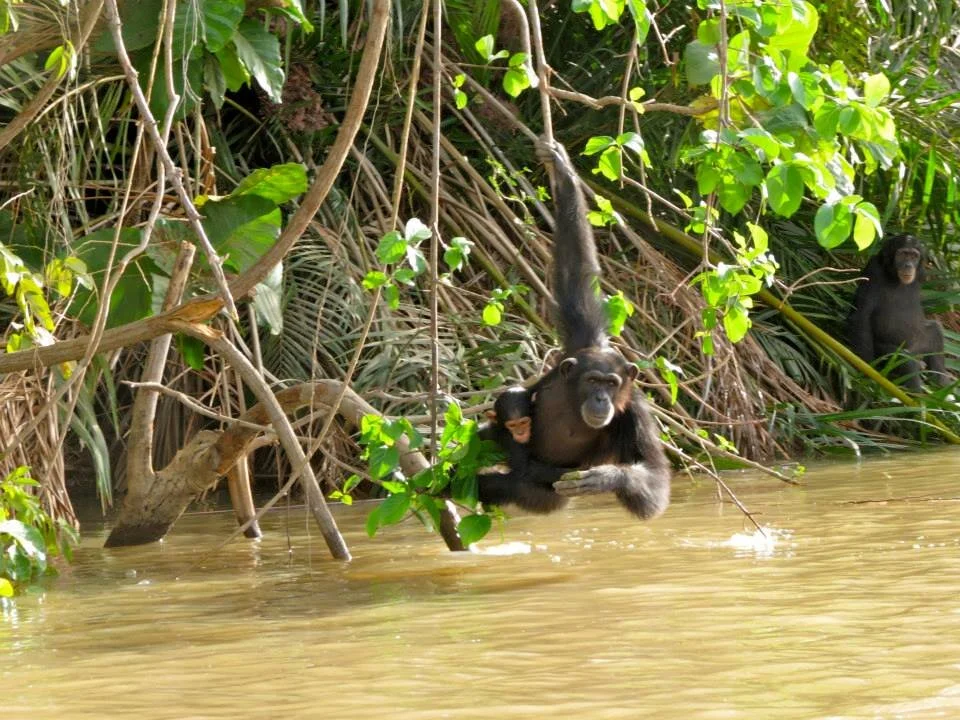
A mother chimpanzee (Pan troglodytes) and her baby at the Chimpanzee Rehabilitation Project in the Gambia. All of the chimps living at the CRP are former pets, circus animals or from labs. They live on three islands in the middle of the River Gambia and are provisioned (given extra food) twice a day by the CRP staff. This is their only human “contact.”